

Introduction
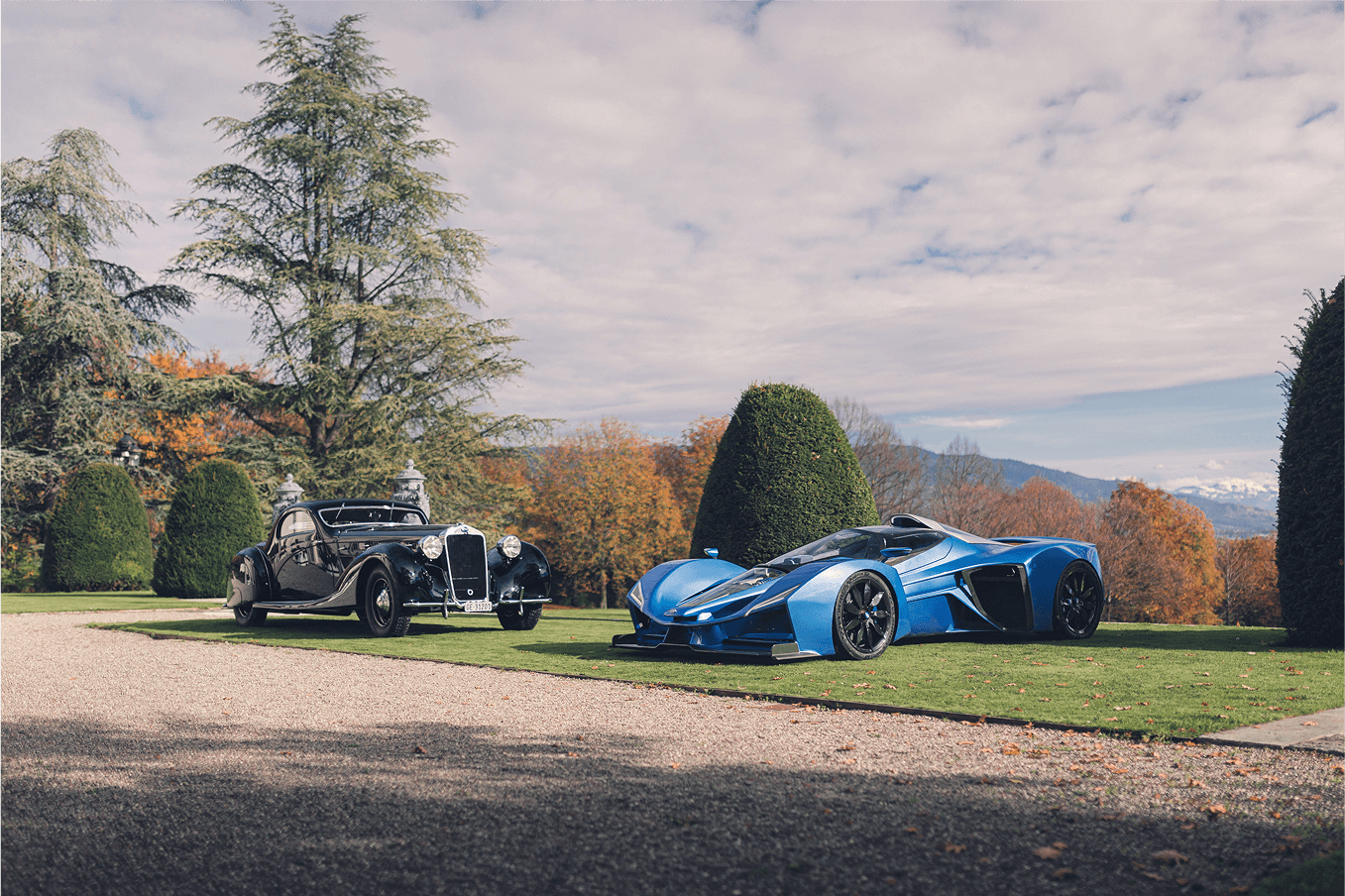
With a luxury car, you’re selling desire, status, and perceived perfection. The image must be flawless—from carefully designed reflections and crisp lines to high-end retouching that elevates without distorting. Every decision—location, lighting, angle, color—should deliver the same promise: a premium look aligned with the brand’s DNA.
Creative Intent & Brand Fit
Start by clarifying the model’s positioning: is it a pure sports car, an executive sedan, a grand tourer built for long miles, or an EV that champions innovation? That intent immediately guides your aesthetic choices. Build a tight mood board blending architectural surfaces and refined textures—raw concrete, polished glass, brushed metal—and keep the palette focused to avoid a catalog feel. Ensure coherence across the scene: any talent, their wardrobe, and props should be minimalist and perfectly aligned with the brand universe, never stealing attention from the car.
Locations & Studio
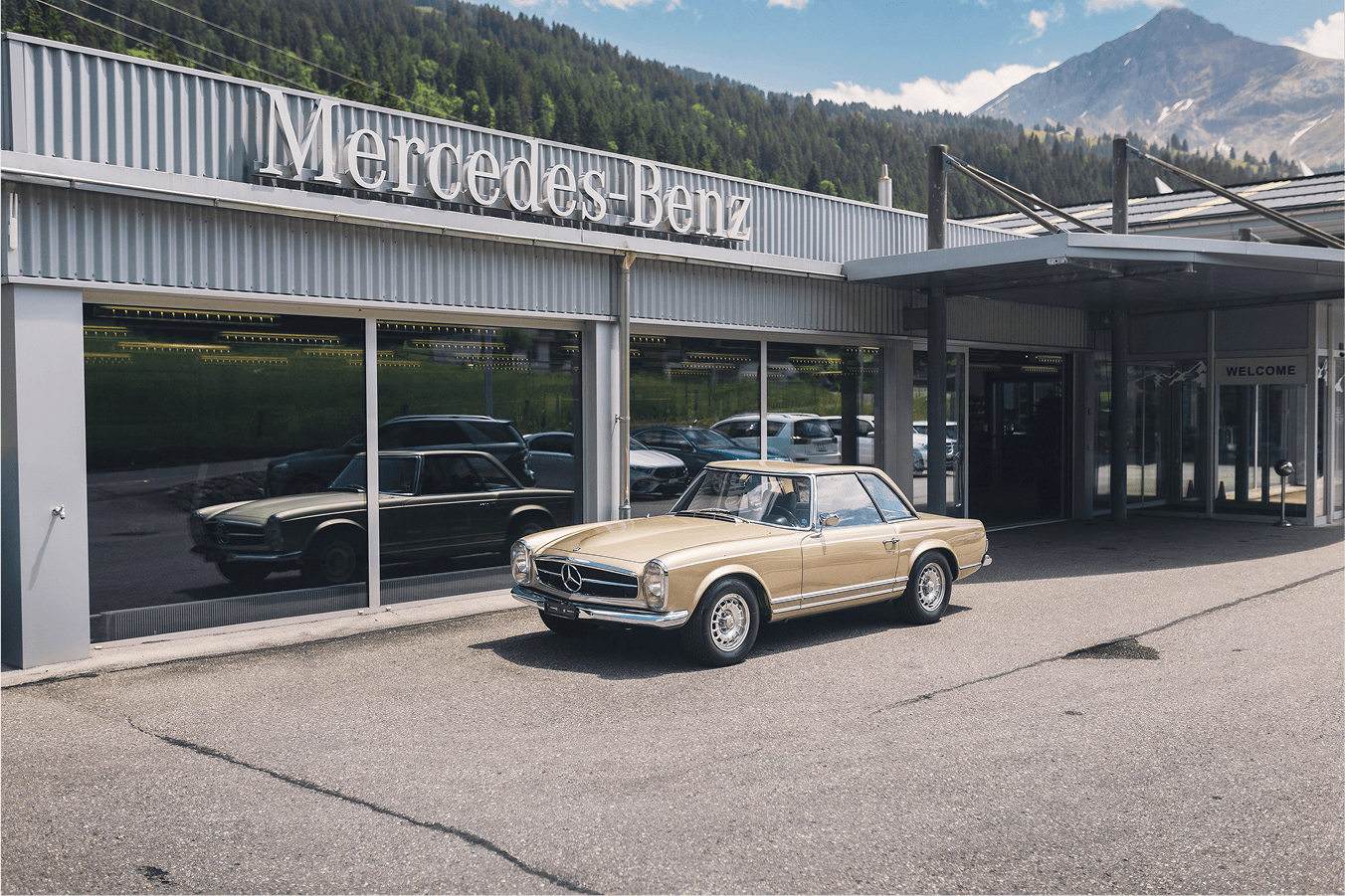
Contemporary architecture with glass or concrete façades creates graphic silhouettes that emphasize edges and modernity. A clean rooftop or open parking deck gives you a clear horizon and strong lines—and on breezy days, a natural hint of motion in fabrics that brings life to the frame. When absolute control is paramount, a cyclorama studio wins: neutral backgrounds, total reflection control, and the option to paint perfect gradients along the bodywork. Choose a setting not just for beauty, but for how it shapes the car.
Controlled Lighting
High-end imagery relies on large sources—120–180 cm softboxes, octas, or strip boxes—to smooth curves and avoid harsh micro-reflections. Use flags and negative fill (black panels) to create dark bands that sculpt the body and add volume. Add accent lights with small strip boxes to trace an edge on a fender, hood, or rocker panel. Adapt to color: on a black car, expose the reflections rather than the paint to reveal form; on a white car, deliberately create shadows to define volume. For interiors, favor diffused sources (softened LED panels) plus reflectors to avoid hotspots on leather and piano-black trims.
Essential Shots
Plan a concise yet decisive set built around hero frames: a three-quarter front with front wheels slightly turned toward camera, a three-quarter rear, a clean profile, and a frontal shot for authority. Add signature details—headlights, grille, monograms, stitching, infotainment controls—that anchor the image in the model’s identity. Where legal and safe, include rolling shots: use a shutter between 1/40 and 1/80 s for motion blur, shoot with a photographer as passenger, and work on a closed/controlled road. Don’t forget the cabin: driver’s area, seat design, rear space, and trunk—because in luxury, visible comfort is part of the promise.
Settings & Technique
For a clean, dense look, start at ISO 100–200, f/8–f/11 for sharpness and line integrity, and AF-S for static views. Switch to AF-C as soon as the subject moves, especially for pans. Tethering (shooting connected to a computer) is highly recommended to validate reflections, perspective alignment, and micro-sharpness in real time. On macro details (badges, stitching), consider focus stacking to achieve ideal depth of field without stopping down excessively.
High-End Retouching
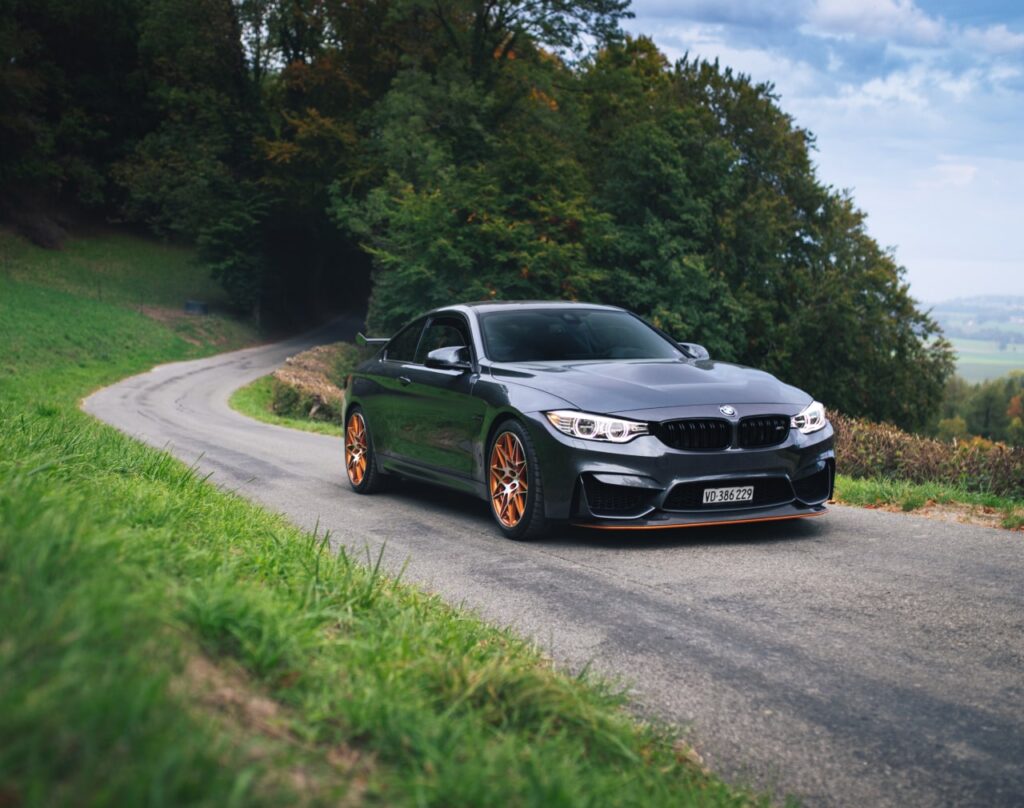
Premium post begins with meticulous cleanup: dust, smudges, micro-defects. Follow with subtle gradient dodge & burn to achieve silky, even transitions—avoid digital harshness. If needed, build the final image from multiple exposures/lighting passes to reach a “perfect” yet natural result. Keep color grading restrained and brand-accurate: respect factory colors and avoid fanciful hues that misrepresent materials. Deliver output tailored to usage: for the web, long edge at 2048 px in sRGB with light sharpening; for print, 300 dpi and AdobeRGB (or CMYK per printer) to preserve nuance and saturation.
Legal & Deliverables
Handle logistics up front: location permits (private/public) and appropriate insurance if you’re doing rolling shots or using a rig. Define usage rights clearly—duration, territory, and media (social, press, OOH/DOOH). Finally, enforce a clear file-naming and folder structure for frictionless archiving: Brand_Model_Location_Date_Shot, with complete metadata and retouch notes for future updates.
Express Checklist (narrative style)
Before shooting, confirm your lighting setup mixes soft sources and flags, your hero shots and signature details list is locked, tethering is live for reflection control, and the premium retouch plan (cleanup, gradients, dedicated web/print exports) is baked into the workflow. That preparation ensures a cohesive, elegant series that meets luxury standards.
Get in Touch
Whether you’re looking to showcase your car in dramatic night scenes, capture the elegance of rain reflections, or highlight speed and motion with precision, our team is here to help. We provide professional automotive photography services tailored to your vision.
